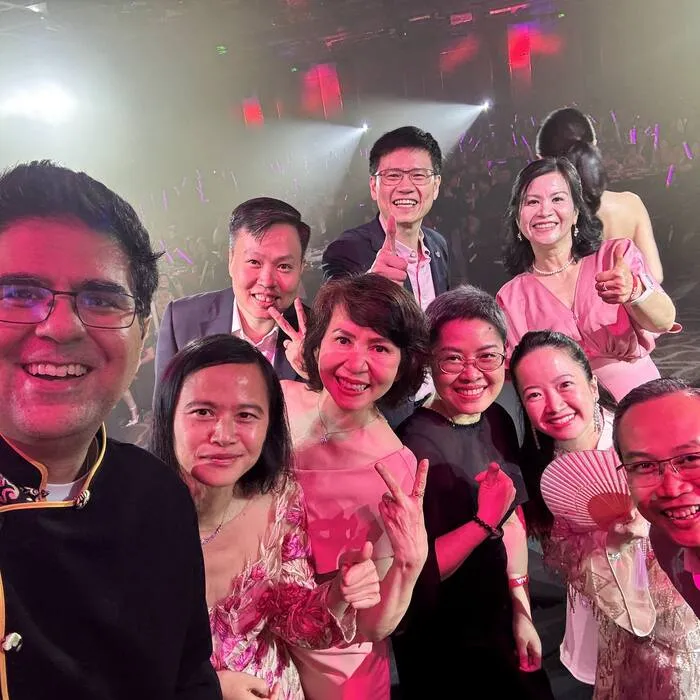
Sumit Nangia

Sumit Nangia

Leadership · Transformation · Technology · Customer Experience

Creating order from chaos — by building technology platforms, health ecosystems, data foundations and leadership cultures that help businesses move faster, serve customers better and grow with discipline.

22+years across insurance, transformation and operations
500+colleagues led across Technology and Customer Services
4markets across the leadership journey
1%better every day

Who I Am

I am a business transformer who uses technology as the lever, customer experience as the lens, and operating discipline as the engine.

Executive portrait

Tech enthusiast. Business transformer. Builder of teams.

My professional journey has moved from operations to sales strategy, from entrepreneurship to digital transformation, and from functional leadership to enterprise-scale technology and customer leadership.

Across these stages, I have worked on agency digitalisation, health operations, AI adoption, data architecture, claims transformation, customer journeys and enterprise operating models. The common thread is not technology for its own sake. It is the ability to solve complex business problems by understanding how people, processes, data, systems and incentives connect.

Transformation is not a project. It is the operating system of a business.

TechnologyOperationsHealthAICustomer Experience

Turning Points

  1. Photos to come

    Fifteen years old. Twelve years of school behind me, most of them bad. Bullied. Good at Science and English, terrible at Maths, average at everything else.

    Then I failed Maths outright.

    My ego was bruised. It was also the best thing that ever happened to me. It made me focused in a way that nothing before it had managed.

    I changed class. The company changed, and I poured myself into Maths. Between 1998 and 2001 I was a different student, and the only thing that had really changed was that I had stopped waiting for someone else to fix it.

    The lesson took longer to name than it took to learn. Company matters. Your friends will stay for the fun and games — and when it stops being either, you are alone to fend for yourself. You cannot blame anyone for your misery. Not the people around you, not the year you had, not the luck of it.

  2. Photos to come

    Three years at Shaheed Sukhdev College of Business Studies in Delhi. Ironically, the thing I was most scared of — Maths — was the one thing absolutely essential to landing a seat in the Bachelor of Financial and Investment Analysis programme.

    I became class representative, which I had not expected. And somewhere in those three years I became competitive — not mildly. Extremely.

    Something had flipped. The boy who flunked Maths at fifteen was now the one keeping score.

    I can do better if I put my mind to it.

    Obvious, written down. It took me until twenty to believe it.

  3. Photos to come

    My first job, and the fastest I have ever learned anything.

    I was formally trained in Six Sigma here, and in NLP. But the training is not what I remember. What I remember is hacking into the main PA database and building my own reporting platform on top of it — with no background in any of it, no degree in it, and nobody having asked me to.

    That taught me the thing I have relied on ever since. Anything can be learnt. Especially in tech. You don’t need a formal degree, you need a reason and enough stubbornness to stay with it.

    An Outstanding rating became a goal, then a habit. The promotions came quickly.

    Two people said things to me in those four years that I still repeat.

    In god we trust, rest bring data.

    Kapil Arora

    All sorts of idiots will get ahead of you in life in the short term. If you’re sincere and putting in the effort, you will win in the end.

    Chirag Jain
  4. Photos to come

    Four years. I moved out of operations and into sales strategy, and got a name as the person you handed the difficult problems to. I did a PGPM at MDI across the same years, in the evenings and at weekends.

    Keep trying. You may get things right one time in ten at first. Keep going till you’re at ten out of ten.

    Shalabh Saxena
  5. I left and started my own company. Or I thought that’s what I was doing — I was still naive.

    I ran a technology business without knowing any technology. That sounds worse than it was — I learned it the way I had learned the reporting platform at Aviva, by needing to.

    WordPress, Magento, Joomla. PHP and CakePHP. jQuery, Bootstrap, HTML5. MySQL, ASP.NET, CentOS boxes with Cloudflare in front. AngularJS towards the end, when it was still new enough to feel like a bet.

    I could not have written a line of any of it when we started.

    Fifty-odd people. An office in Gurgaon, another registered in Delaware. Around sixty clients across twelve industries. Google Partner, Bing accredited, ISO 9001:2008 registered, and eleven months from launch to paying for itself. For three years I believed I could do anything, and for a while the evidence supported it.

    Then it stopped supporting it. I was doing too many things at the same time, and doing too many things at the same time is how you do all of them badly.

    Don’t do too many things at the same time.

    It is the plainest lesson on this page and the one I have had to relearn most.

    I have had no association with FierceHound, in any capacity, since 2015.
  6. Photos to come

    A year in corporate strategy. It was a soft landing, and I got one because I had built equity there before I left.

    Building equity matters. It can bail you out one day.

  7. Five years in Kuala Lumpur. Real value delivered. Innovation I am still proud of.

    And the first time I properly understood the terms I was working under.

    You are an expat. Here today, gone tomorrow. Your company values you exactly as long as you are delivering, and the arithmetic is not personal.

    That reads colder than I mean it. I made some real friends in Malaysia — the kind that outlast the job. Both things are true. Neither one cancels the other.

  8. My first Exco role.

    I took over at a turbulent moment for the company, and I was not allowed a handover. Not for Tech, not for Ops. Nobody sat me down and explained anything. I walked in and the job had already started — in the middle of Covid.

    I was scared of the responsibility. I had to build everything from scratch, including the team. I had imposter syndrome, and not briefly — it stayed for a long time.

    I got a 1 rating that year. My first.

    Andrew Loh named the thing I was carrying before I had.

    The need to prove my ability to deliver results.

    Andrew Loh
  9. Same again. Turbulent moment. Much larger scale — five hundred people. A hundred and fifty in IT, two hundred and fifty in Ops, another hundred contractors.

    The first ten months: operations stabilised. IT general operating expense down twenty-six per cent. A clear vision set for the next three years. Business noise cut down for both functions. And team sentiment turned from extremely negative to mostly positive — which I know is actually true rather than something I would like to be true, because the attrition rate moved with it.

    I have now proven, without a doubt, that I can handle large teams and deliver results.

    I moved from a phase in life where I felt a constant need to prove my capability, to one where I could feel confident in my ability to bring order to chaos.

    The need to prove myself was always internal.

    I feel relieved that this phase has ended, and I wonder what’s next.

Career Journey

Six professional identities

My career has evolved through six professional identities — Operator, Strategist, Entrepreneur, Transformation Leader, Executive and Enterprise Builder. Each stage added a new layer to how I understand business transformation.

The Operator

Aviva

At Aviva, I built my foundation in operations, cash management, bank reconciliation, transaction processing and process improvement. I designed and built an MS Access tool to automate routine transaction processing, reducing errors and helping the team focus on exception handling. This was the first proof that technology could solve operational problems.

The Strategist

Canara HSBC Life

At Canara HSBC Life, I moved from operations into sales strategy, business planning, financial modelling, performance management, CRM-style sales productivity platforms, digital transformation and online sales. This stage taught me how to connect operating detail with senior leadership decision-making.

The Entrepreneur

FierceHound

At FierceHound, I helped build a digital services company covering web/software development, digital marketing, content, search, hosting and online reputation management. It was the chapter where I learned to build, not just manage.

The Transformation Leader

AIA Malaysia

At AIA Malaysia, I led agency digitalisation and transformation initiatives including the AIA Life Planner App, AIA Recruiter, web analytics, digital magazine AD Buzz and a gamification framework for Agency Sales.

The Executive

AIA Cambodia

At AIA Cambodia, I led technology and operations transformation, launched Health and Corporate Solutions from the ground up, strengthened technology infrastructure, delivered cloud migration and helped achieve strong operational KPIs.

The Enterprise Builder

AIA Vietnam

At AIA Vietnam, I lead Technology and Customer Services transformation, including health operations insourcing, data and digital foundation redesign, AI use cases, IT cost optimisation and a multi-year transformation roadmap across sales, operations and marketing.

Education & Roots

Where the discipline came from

Before the boardrooms and transformation roadmaps, there was a school in Delhi, a college campus at Delhi University, and a business school in Gurgaon — the stops that built the discipline this career runs on.

Commerce-stream schooling in Delhi — Accountancy, Business Studies, Economics and Mathematics were the core papers, the same combination that later opened the door to a specialised finance degree.

A specialised three-year, 24-paper undergraduate programme built specifically around finance and investment rather than general commerce — financial statement analysis, quantitative techniques, financial instruments and markets, and security analysis and portfolio management.

Core management papers across the first year, then a Finance specialisation drawing on financial risk management, international corporate finance, investment management and corporate restructuring and business valuation. The formal grounding underneath two decades of P&L ownership and transformation business cases.

The DMAIC methodology — Define, Measure, Analyse, Improve, Control — put directly to work automating a transaction process at Aviva, cutting open credits from 2% to under 0.25%.

A formal complement to two decades of running transformation projects by instinct.

Grounding for the technical conversations that come with leading Technology and Operations teams.

The backbone for the many agile-run transformation projects across AIA Malaysia, Cambodia and Vietnam.

A SEBI-anchored foundational module — a grounding from the early Canara HSBC years in financial markets.

The Four Roles

Patterns of value creation

Across my career, I have repeatedly played four distinct but connected roles. These are not job titles. They are patterns of value creation — the ways I tend to enter a problem, understand the system, and build something that can scale.

01 · The Health Builder

I build health businesses as ecosystems — not as isolated products.

In Cambodia, this meant launching Health and Corporate Solutions from the ground up, including the product, medical network, customer journeys, systems design and technology backbone. In Vietnam, this meant helping shift the organisation from outsourced claims administration toward in-house health operations, supported by a 400+ partner clinic and hospital network and a more data-driven approach to claims operations.

Healthcare transformation succeeds when product, provider network, claims operations, data, technology and customer experience move together.

Cambodia Health LaunchCorporate SolutionsVietnam Claims Insourcing400+ Provider Network

02 · The Data Architect

I treat data and architecture as business enablers, not technical back-office concerns.

At AIA Vietnam, the challenge was not just to build more digital journeys. The deeper issue was the foundation those journeys ran on. The transformation priority was to simplify architecture, strengthen data governance, reduce operational complexity and prepare the enterprise data foundation for AI-enabled operations.

AI cannot scale on weak data foundations.

3 ODS Layers5,000+ PipelinesData Engineering RevampAI-Ready Foundation

03 · The AI Pathfinder

I believe AI should move from experimentation into governed operating infrastructure.

At AIA Vietnam, the team developed the INFINITY Framework — a multi-agent setup designed to simplify chatbot-style GenAI delivery by standardising controls, interfaces, content mapping, security, cost review and output governance. The roadmap spans agent, customer and department use cases, with reusable capabilities such as FAQ, file upload, database access, natural language interaction, feedback loops and RAG-related capabilities.

AI should not remain a lab experiment; it should become safe, reusable and embedded into real work.

INFINITY FrameworkAgent AI AssistantCustomer Chatbot RoadmapDepartment Assistants

04 · The Enterprise Transformer

I enter complex environments, find the underlying structure, and build systems that make performance repeatable.

In Malaysia, this showed up through agency digitalisation. In Cambodia, it showed up through health, operations and technology transformation. In Vietnam, it shows up through enterprise-scale transformation of Technology and Operations — reducing IT spend, reorienting IT and Ops toward business outcomes, building AI capability and reshaping data and digital foundations.

Transformation is not a project. It is the operating system of a business.

Agency DigitalisationHealth TransformationIT Cost OptimisationAI Scaling

Signature Transformations

The record

AIA Vietnam

Technology and Operations Transformation

Reduced IT spend by 26% within the first year through a nine-point improvement program — cutting outsource support by up to 40% — while laying the foundation for a major technology overhaul and re-orienting Technology and Operations toward customer centricity and growth mindset.

AIA Vietnam

Health Operations

Launched Health operations — first among the top three players in the market — by insourcing Claims Administration services and creating a 400+ partner clinic and hospital network.

AIA Vietnam

AI at Scale

Brought AIA Vietnam into the age of AI with use cases across the business value chain, including OCR, voice-to-text, text-to-speech, eKYC, claims medical data extraction, FWA model and chatbots.

AIA Cambodia

Health from Scratch

Launched Health and Corporate Solutions from the ground up — product, medical network, user journeys, systems design and technology backbone — with Phase 1 delivered in under six months and 10%+ market share captured to become market leader in health.

AIA Cambodia

Operational Performance

Delivered best-in-class KPIs across AIA's emerging markets: 95% Buy STP, 100% T+1 delivery across Buy, Service and Claim, 95% customer satisfaction, industry-leading 67% 13th-month persistency (vs ~40% industry average), and a 32% reduction in operating unit cost.

AIA Malaysia

Agency Digitalisation

Delivered high-impact agency transformation initiatives including the AIA Life Planner App, AIA Recruiter, AD Buzz and a gamification framework for Agency Sales — contributing to 2x growth in the agency business (2017–2021) as the agency force scaled from 13,000 to 20,000+ agents.

FierceHound

Building a Company from Zero

Took FierceHound from launch to a financially self-sufficient, ISO 9001:2008-certified digital services company within 11 months — scaling to 50+ employees and roughly USD 300K in turnover, while expanding into the US and Southeast Asian markets as a Google and Bing accredited partner.

Aviva

The First Six Sigma Win

Built an MS Access-based automation tool as a Six Sigma Green Belt project, cutting open credits from 2% to under 0.25% and reducing the manpower required by four — the first proof that process discipline plus technology could outperform manual effort.

Operating Model

Notes to myself

Not advice.

01

Bring data

In god we trust, rest bring data.

Learn to separate fact from emotion. Decide on the facts.

01 / 14

What I need to change

More disciplined about sticking to timelines.

More disciplined about managing my own time. Exercise. Hobbies.

Ask for help

There is no shame in asking for help.

There is no bravery in not asking.

The contradiction is deliberate. I see it. Knowing which one the moment calls for is the part that matters.

What help do I need

None. I have to own all my shortcomings and solve them on my own.

Writing

Recent posts

Occasional pieces on technology, transformation and the work of leading it. Written as and when, not as a running commentary.

  1. A numbered "01" beside a small icon of commit resolving into a published page

    How This Site Works, and Why It Exists

    A rebuild, a database, a moderation queue, a mail binding that cannot reach anyone but me. The architecture of sumitnangia.com, vibe-coded over a weekend, with every deploy still pushed by hand on purpose.

    Read more →

Read all writing →

Next Chapter

The next chapter is not about proving capability. The evidence already exists.

The next chapter is about scale — building leaders, systems and operating rhythms that continue to create order without me being at the centre of every solution.

The question is no longer:

Can I solve the problem?

The question is:

Can I build an organisation that solves complex problems repeatedly, responsibly and without dependency on one person?

My past success came from creating order out of chaos. My next success will come from creating leaders and systems that can do the same without me.